

The Enigma of One nation, One Election
Posted by admin on 2024-09-20 |
The Union Cabinet's approval of the
'One Nation, One Election' (ONOE) proposal has set the stage for an ambitious
plan. If passed by Parliament, India will join a small group of
countries—Belgium, Sweden, and South Africa—that conduct simultaneous national
and regional elections. While these nations are much smaller, India's challenge
lies in managing the scale and complexity of such a move.
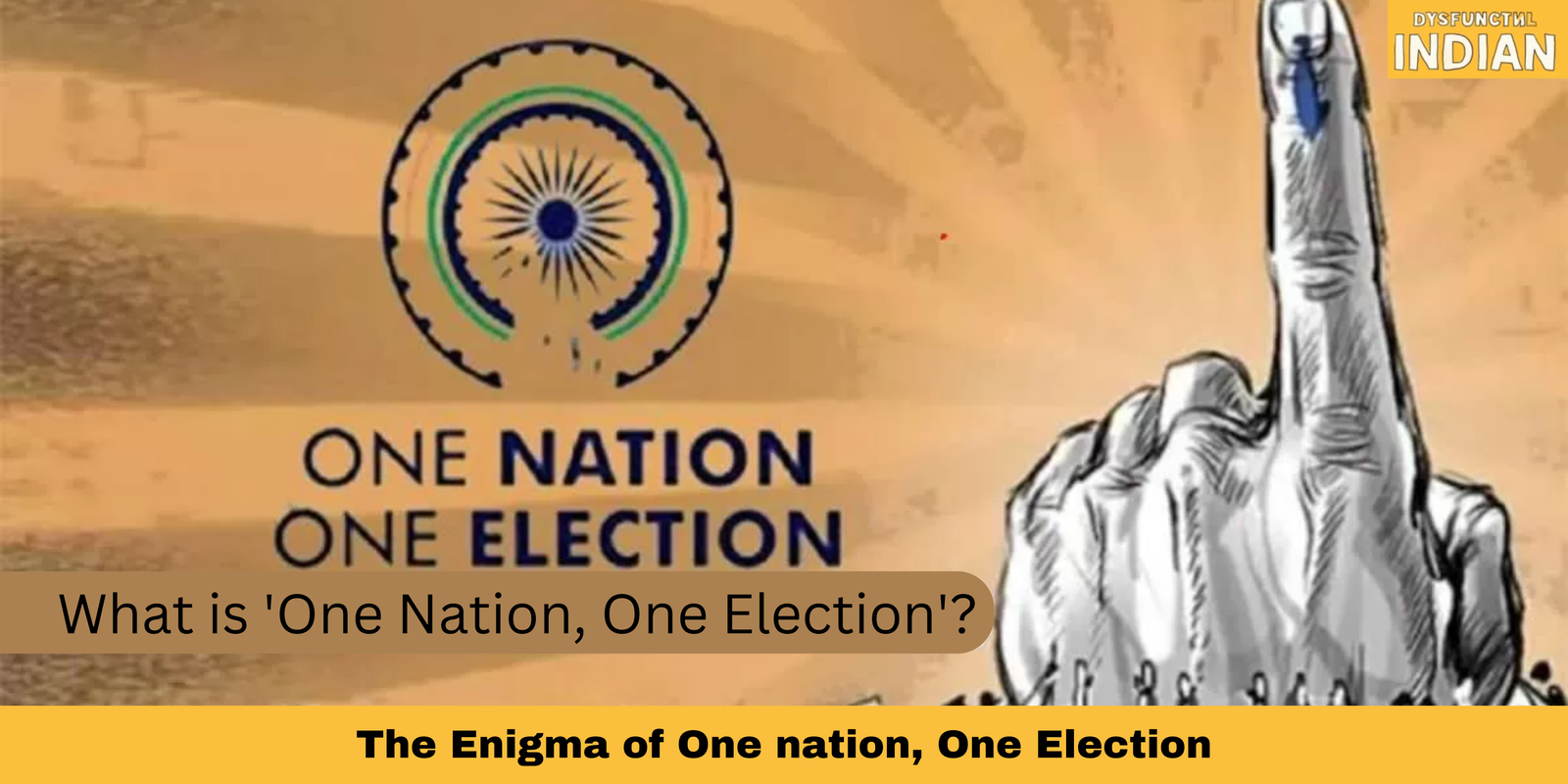
What is 'One Nation,
One Election'?
The concept of ONOE revolves around
holding simultaneous elections for both the Lok Sabha and State Assemblies
across the country. Prime Minister Narendra Modi has been a consistent advocate
of this idea. Currently, elections for state assemblies and the Lok Sabha are
held separately, either at the end of a government's five-year term or when
governments are dissolved prematurely.
Supporters of ONOE argue that
conducting elections together will significantly reduce costs, improve
administrative efficiency, and may even boost voter turnout. They highlight
that frequent elections stretch state resources, keep political parties in
constant campaign mode, and can lead to corrupt practices. On the other hand,
critics worry about the potential centralization of power, allowing the Centre
to influence regional parties and state politics.
A Historical
Perspective on Simultaneous Elections
Simultaneous elections aren’t new to
India. In the first two decades of the Indian Republic, Lok Sabha and assembly
elections were held together. This practice started with the first general
elections in 1951-52, where Vidhan Sabha polls were held simultaneously. This
continued until 1967 when the trend was disrupted by hung assemblies. In the
following years, prematurely dissolved Lok Sabhas and state assemblies broke the
simultaneous election cycle.
The Benefits and
Challenges of ONOE
On paper, the benefits of ONOE are
clear: reduced election costs, greater accountability, and improved governance.
However, for this idea to succeed, a robust, foolproof plan must be in place to
handle scenarios such as governments not completing their full terms.
Implementation is another major challenge, considering India’s vast scale,
diversity, and complexity.
While the Election Commission (EC)
has shown its capability in conducting large-scale elections, ONOE represents a
challenge of a much larger magnitude. Seamless coordination of EC personnel and
central forces, managing election violations, and ensuring that EVMs are ready
for multiple rounds of voting are just a few of the logistical hurdles. Voter
education is also crucial—helping people understand and transition to a new
system where they simultaneously vote for central, state, and local mandates is
no small task.
Legal and
Constitutional Hurdles
To implement simultaneous elections,
India would need to make several constitutional amendments. Key articles like 83, 85(2)(B), 174(2)(B), 356,
and 75(3),
along with changes to the Representation of People's Act, 1951, will need to be
amended. This requires a two-thirds majority in Parliament and ratification by
at least half of the states—a significant political challenge in itself.
Which Countries Use
'One Nation, One Election'?
Countries like South Africa, Sweden,
and Belgium already have systems where national and regional elections are held
together. Even the United Kingdom has implemented a similar system for certain
levels of elections. In 2017, Nepal also conducted joint elections after
adopting a new Constitution, which required simultaneous elections at all
levels.
India has proven its ability to
execute seemingly impossible projects before. A recent example is the country’s
successful vaccination drive during the COVID-19 pandemic, where it vaccinated
nearly its entire population. With proper planning and testing, India can pull off
ONOE as well. However, the system’s "software" (the administrative
and logistical plans) and "hardware" (infrastructure, personnel, and
EVMs) must be thoroughly tested before a full rollout.