

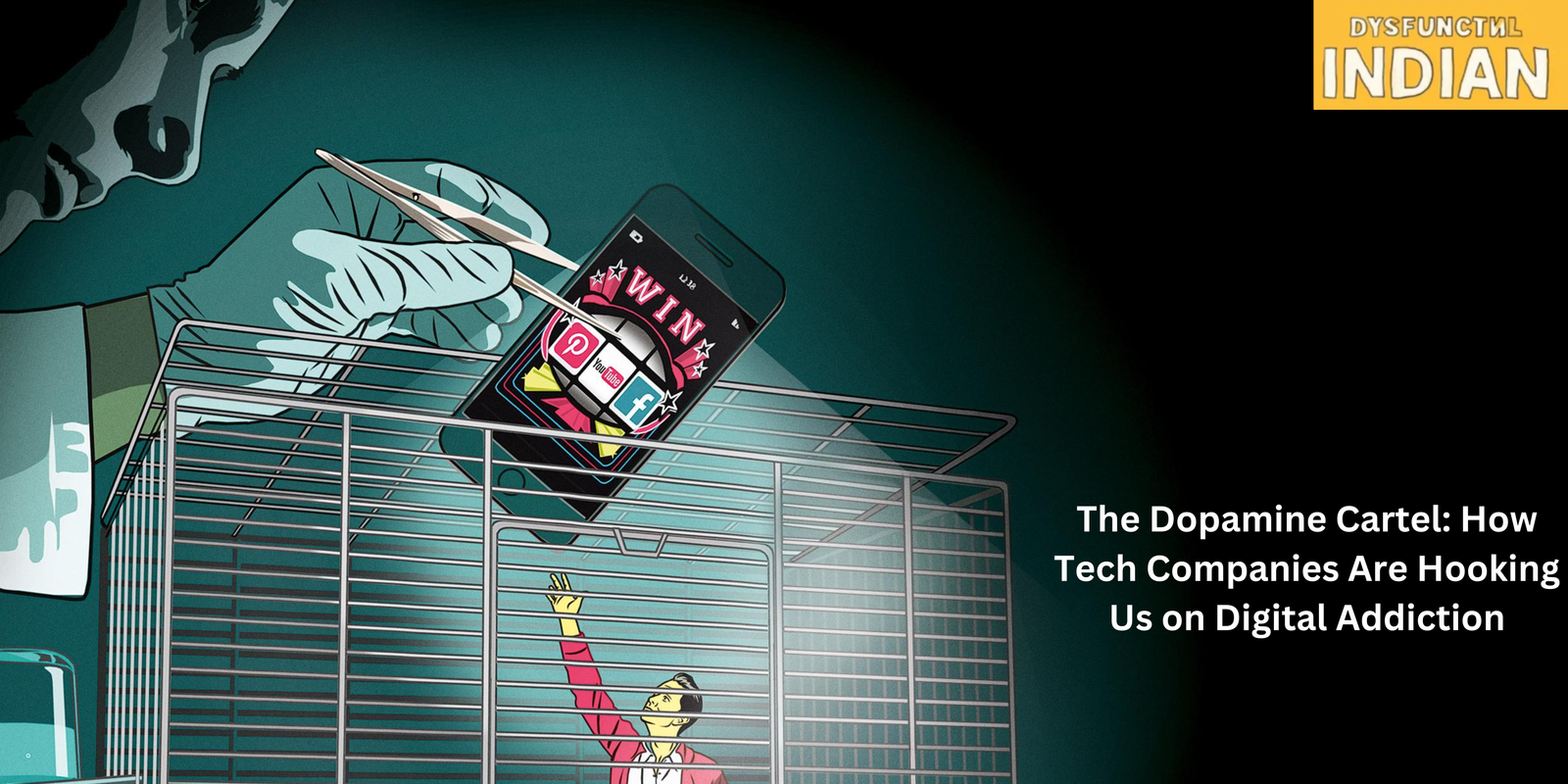
The Dopamine Cartel: How Tech Companies Are Hooking Us on Digital Addiction
Posted by admin on 2024-09-07 |
In 2024, we're witnessing a massive
shift in how we consume entertainment—and it’s not all good. Tech companies are
quietly reshaping culture, fueled by a chemical in our brains. Entertainment as
we once knew it—movies, music, even TV— is fading. Disney's struggling, Warner
Bros. is canceling films to make more money, and musicians? They’re worth more
when they’re dead than alive. But something darker is filling the void: dopamine
addiction, engineered by tech platforms.
This isn’t just about distraction.
What’s replacing entertainment is straight-up addiction. Apps like TikTok,
Instagram, and Facebook have locked us into a loop of dopamine hits, the
feel-good chemical that rewards our brains. Every scroll, swipe, and like
releases a microdose of dopamine, pulling us back for more. But here’s the
kicker—the more we chase these fleeting bursts of joy, the less actual
satisfaction we get.
Why Dopamine Addiction Is
Taking Over
What we’re dealing with isn’t just a
tech trend—it’s an epidemic. Every short video, meme, or headline is a quick
hit designed to spike dopamine, locking us into an addictive cycle. The problem
is, this constant loop leaves us more drained than fulfilled. We start to feel
anhedonia—a complete inability to find joy in real-life experiences, like
hanging out with friends, exploring hobbies, or enjoying the simple things.
And the tech companies know exactly
what they’re doing. Like drug dealers, they’ve optimized their platforms for
addiction, creating systems that keep users hooked and endlessly scrolling.
They’ve even got the next generation in their sights, targeting younger and
younger users to create lifelong addicts. It’s not about connecting people
anymore—it’s about keeping them in the dopamine trap.
The Rise of Virtual
Reality: The Next Level of Addiction
If social media wasn’t enough, now
there’s virtual reality (VR). Companies like Apple and Meta are pushing VR
headsets, designed to pull people even deeper into their manufactured worlds.
Sure, it looks cool on the surface, but the long-term effects could be
dangerous. Aside from physical problems like nausea and headaches, there’s
something called "simulator sickness." It’s essentially the brain rewiring
itself to adapt to these fake realities, which could have major mental health
consequences down the line.
People are being conditioned to live
in these artificial realities, hooked on quick, addictive stimuli, while the
real world fades into the background.
Society’s Happiness Is on
the Decline
It’s not hard to see how this
dopamine addiction is affecting society as a whole. Reports like the World Happiness Report
show that countries with high-tech usage, like the U.S., are seeing major drops
in happiness levels. Whether it's doomscrolling, toxic social media behavior,
or straight-up addiction, people are getting trapped in habits that provide
zero joy—just distraction after distraction.
And tech companies? They’re well
aware of the damage they’re causing. Back in 2021, a whistleblower released internal
documents from Instagram revealed that the app is causing higher rates of
depression, anxiety, and even suicidal thoughts, especially in teens. One study
found that 32% of teen girls said Instagram made them feel worse about their
bodies. Despite knowing this, platforms continue to push harmful algorithms to
keep engagement (and profits) high.
The Science Behind
Dopamine Addiction
Dr. Anna Lembke, the author of Dopamine Nation, breaks
down how our brains are wired for addiction in this tech-driven age. Her
research shows that constantly chasing dopamine through activities like
scrolling and swiping rewires the brain in a way that mimics drug addiction.
Over time, it leads to anhedonia, where people lose the ability to feel
pleasure from real-world experiences, like relationships or hobbies.
What Can Be Done?
The
truth is tech companies are profiting off our addiction. They’ve built a system
that keeps us scrolling, clicking, and swiping, all while rewiring our brains. This
is no longer about entertainment or art; it’s about a systematic effort to
rewire our brains for profit. The solution? Unplug, step outside, and start
noticing the world around you. There’s more beauty in real life than in any
virtual reality. The dopamine cartel can be stopped—but only if we recognize it
for what it is and make a conscious effort to reclaim our attention, our lives,
and our culture.