

Reimagining, Rewiring, and Revolutionizing Modern Education with VR
Posted by admin on 2024-10-01 |
In
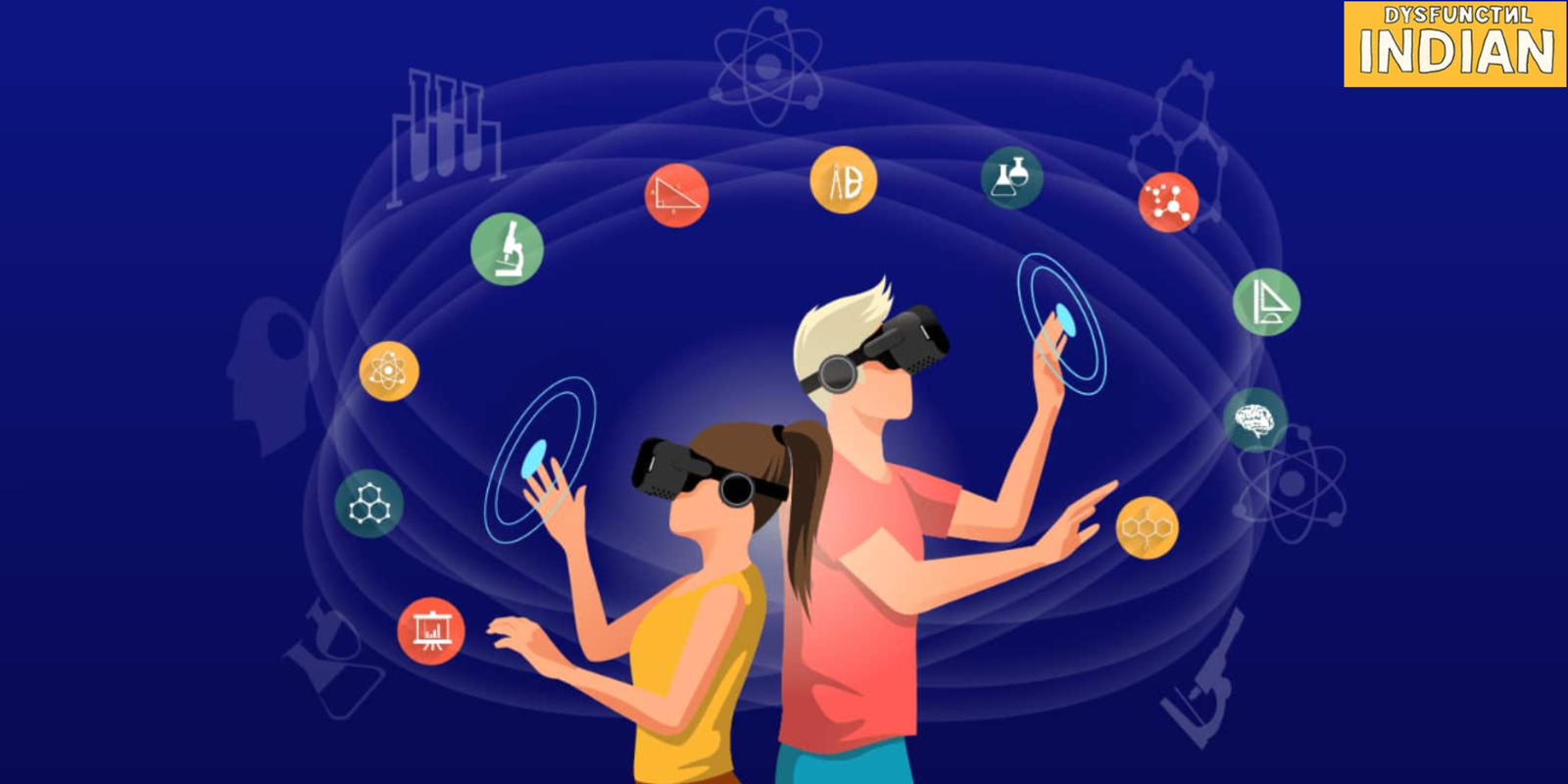
recent years, virtual reality (VR) has emerged as a transformative technology,
offering unprecedented opportunities for enhancing educational experiences. As
classrooms evolve to meet the demands of the 21st century, educators are
increasingly turning to virtual reality to engage students and foster a more
immersive and interactive learning environment. How is virtual reality
transforming the landscape of education, and what potential consequences does
this hold for the future? Projections indicate a substantial increase in the
utilization of Virtual Reality (VR) over the next decade. Although VR is
currently prevalent in households primarily for entertainment purposes, it is
poised to evolve into a significant educational tool for students and a valuable
asset in the professional environments of adults in the near future.
Here
are profound ways in which VR will impact modern education:
Enhanced Engagement and
Immersion
One
of the key advantages of virtual reality in education is its ability to create
a highly immersive learning experience. A study conducted by the Stanford
Virtual Human Interaction Lab found that immersion in virtual environments
significantly improves learning outcomes. Students exposed to VR experiences
demonstrated increased focus, attention, and retention of information compared
to traditional teaching methods.
Furthermore,
the immersive nature of virtual reality allows students to explore and interact
with subjects that were previously inaccessible. For instance, history students
can "visit" ancient civilizations, biology students can take a
virtual journey inside the human body, and physics students can conduct
experiments in a simulated environment. This hands-on approach not only
captivates students' interest but also deepens their understanding of complex
concepts.
Addressing Diverse Learning
Styles
Education
is not a one-size-fits-all endeavor, and virtual reality offers a solution to
cater to diverse learning styles. A meta-analysis published in the Journal of
Educational Psychology highlighted the benefits of personalized and adaptive
learning environments, which are precisely what virtual reality can provide. VR
applications can be tailored to accommodate different learning preferences,
allowing students to learn at their own pace and in ways that resonate with
their individual strengths.
For
example, visual learners may benefit from immersive 3D visualizations, auditory
learners can engage with interactive simulations, and kinesthetic learners can
participate in hands-on virtual activities. This adaptability helps create a
more inclusive educational environment, where every student has the opportunity
to thrive.
Bridging Gaps in Access to
Education
Virtual
reality has the potential to bridge geographical and socioeconomic gaps in access
to education. A UNESCO report revealed that millions of students worldwide lack
access to quality education due to factors such as geographical remoteness,
economic constraints, or political instability. Virtual reality can provide
these students with a virtual classroom experience, transcending physical
barriers and ensuring that education becomes a global, inclusive phenomenon.
Research
conducted by the World Economic Forum suggests that VR can be particularly
beneficial in higher education, enabling students to participate in virtual
lectures, collaborate on projects, and engage in discussions with peers from
different parts of the world. This not only expands educational opportunities
but also fosters a global perspective among students.
Real-world Simulations and
Practical Training
One
of the most promising applications of virtual reality in education lies in its
ability to simulate real-world scenarios, providing students with practical,
hands-on training. A study published in the Journal of Educational Computing
Research demonstrated the effectiveness of virtual reality simulations in
medical education. Medical students using VR simulations for surgical training
showed improved skills and confidence compared to those relying solely on
traditional methods.
Similarly,
vocational training programs in fields such as engineering, aviation, and
emergency services are leveraging VR to expose students to realistic scenarios
without the associated risks. This not only enhances skill development but also
prepares students for the challenges they may encounter in their future
careers.
Measurable Learning
Outcomes
Educators
are increasingly recognizing the importance of data-driven insights to enhance
teaching strategies and improve learning outcomes. Virtual reality platforms
offer the advantage of collecting detailed analytics on student interactions,
engagement levels, and performance. Researchers at the Harvard Graduate School
of Education conducted a study that analyzed the learning analytics of students
using a virtual reality-based physics curriculum. The results indicated a
correlation between active engagements in VR simulations and improved
conceptual understanding of physics principles.
These
measurable outcomes provide educators with valuable information to tailor their
teaching methods, identify areas of improvement, and offer targeted support to
students who may be struggling. The data-driven approach facilitated by virtual
reality can contribute to a more efficient and effective education system.
The Bottom Line
In
a nutshell, the integration of VR technology into the education system is an
exciting development poised to revolutionize learning by enhancing immersion,
inclusivity, and engagement. The evidence from research studies suggests that
virtual reality not only enhances engagement and immersion but also addresses
diverse learning styles, bridges gaps in access to education, provides
practical training through simulations, and offers measurable learning
outcomes. As technology continues to advance, the integration of virtual
reality into classrooms worldwide has the potential to revolutionize education
and prepare students for the challenges and opportunities of the future.