

Nobel Laureate Dr. Muhammad Yunus Appointed Chief Adviser to Bangladesh's Interim Government
Posted by admin on 2024-08-06 |
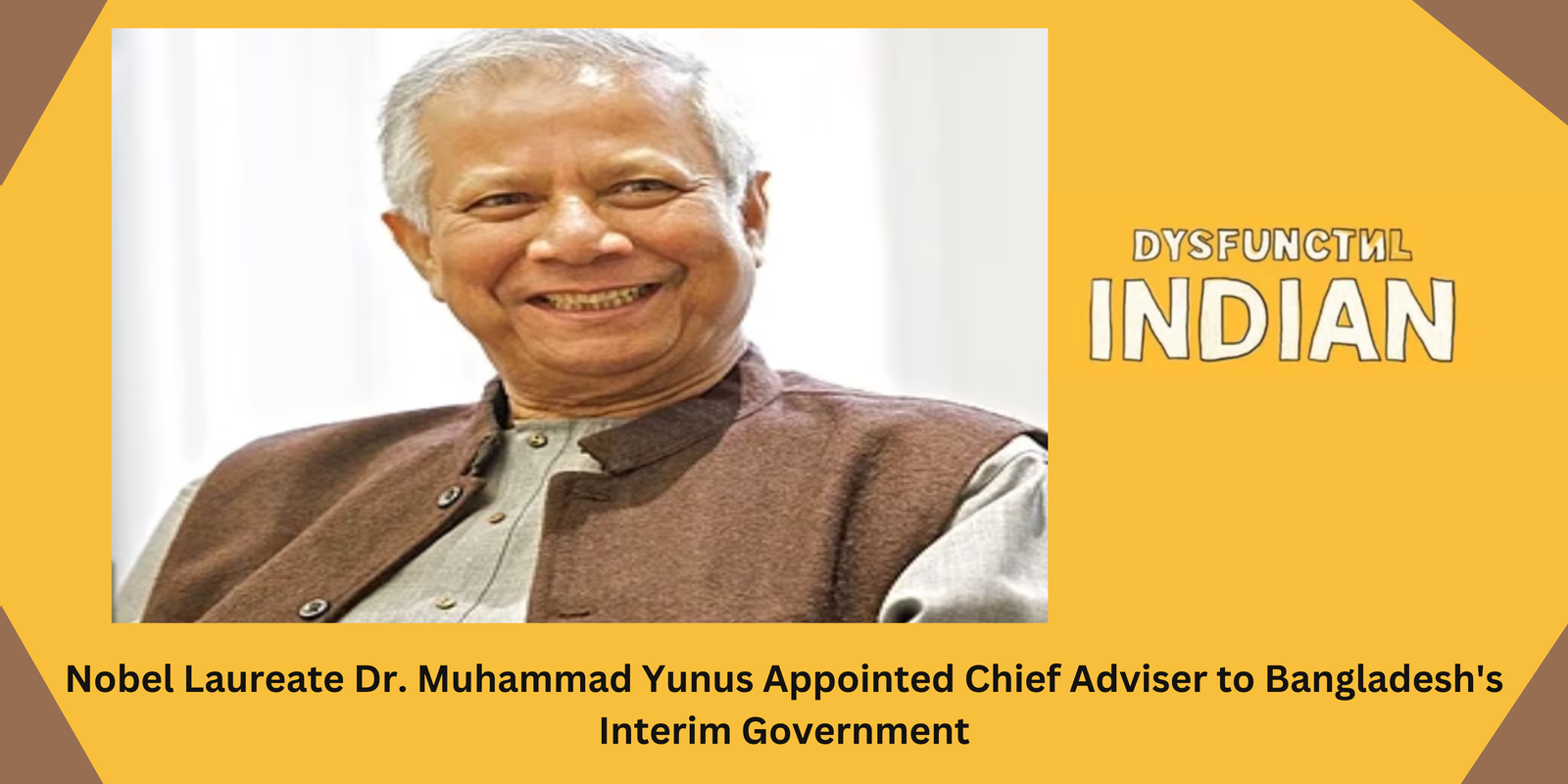
Nobel laureate Dr. Muhammad Yunus has been appointed as the chief adviser to Bangladesh’s interim government. This announcement was made by the coordinators of the Anti-Discrimination Student Movement on August 6.
Nahid Islam, a leading coordinator of the movement, conveyed the news through a video posted on social media early Tuesday morning. Professor Yunus has agreed to take on this pivotal role at the urging of the student community, aiming to guide the country through its current crisis, according to the Daily Star newspaper.
Call for Interim Government
In his statement, Nahid Islam, flanked by two other coordinators, said, "We have decided that the interim government would be formed in which internationally renowned Nobel Laureate Dr. Muhammad Yunus, who has wide acceptability, would be the chief adviser."
This announcement came shortly after a televised address by President Mohammed Shahabuddin late Monday night, in which he ordered the release of former Prime Minister Khaleda Zia, who had been under house arrest due to multiple convictions.
Yunus’s Reaction to National Unrest
In an interview with ThePrint, Muhammad Yunus reflected on the political situation, stating, "We were an occupied country as long as she (Sheikh Hasina) was there. She was behaving like an occupation force, a dictator, a general, controlling everything. Today all the people of Bangladesh feel liberated."
Yunus also addressed the violence and vandalism carried out by protesters, describing it as an outpouring of anger against Sheikh Hasina and a reaction to "the damage she has done" to the country.
Yunus’s Background and Global Recognition
Muhammad Yunus, born on June 28, 1940, in Chittagong, Bangladesh, is a prominent social entrepreneur, banker, economist, and leader in civil society. He gained international acclaim in 2006 when he and the Grameen Bank were awarded the Nobel Peace Prize for their pioneering efforts in microcredit and microfinance.
In addition to the Nobel Prize, Yunus has been honored with several prestigious awards, including the United States Presidential Medal of Freedom in 2009 and the Congressional Gold Medal in 2010.
Legal Troubles and Embezzlement Case
Despite his accolades, Yunus has also faced legal challenges. He was jailed in connection with a USD 2.3 million embezzlement case. The case revolves around a workers' welfare fund of Grameen Telecom, which owns 34.2 percent of Grameenphone, Bangladesh’s largest mobile phone company and a subsidiary of Norway’s telecom giant Telenor.
The charges allege the misappropriation of over 250 million takas and money laundering, with the funds being redirected to trade union leaders rather than the workers, thereby depriving ordinary workers of their rightful earnings.
Sheikh Hasina’s Sudden Resignation and Escape
The political landscape in Bangladesh was thrown into disarray on Monday when Prime Minister Sheikh Hasina unexpectedly resigned and fled the country in a military aircraft, leaving a power vacuum that was quickly filled by the Army. As the news of Ms. Hasina’s departure spread, hundreds of people broke into her residence, engaging in acts of vandalism and looting.
This dramatic event was the culmination of anti-government protests that have resulted in over 300 deaths in just two weeks, reflecting the growing public discontent with her leadership.