


Made in China: The New Working Class of ‘Rotten-Tail Kids’
Posted by admin on 2024-08-29 |
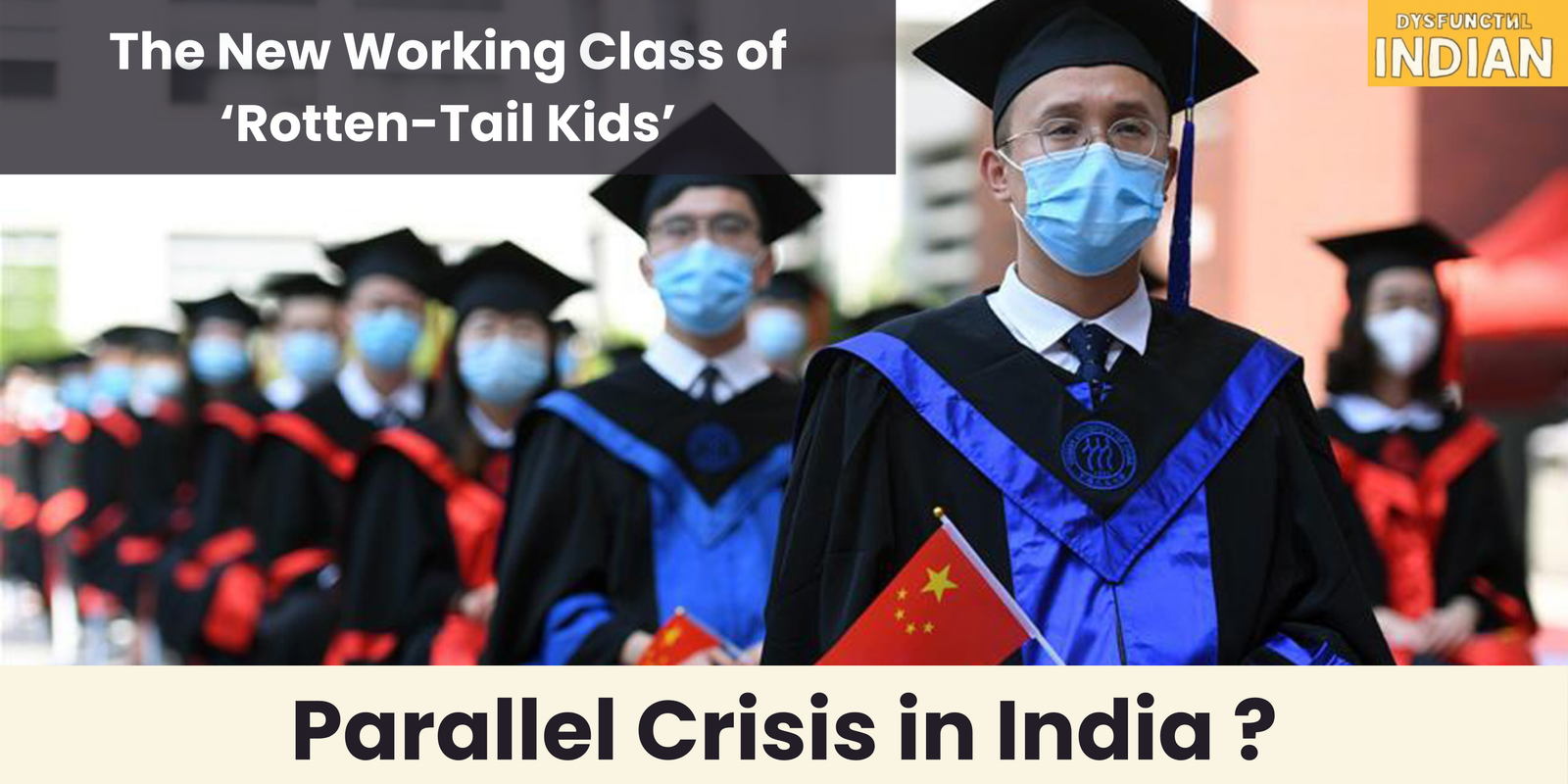
In China,
unemployment has surged so high that an entire generation of fresh graduates is
now referred to as 'rotten-tail kids.' The term is a wordplay on 'rotten-tail
buildings,' which refers to the unfinished apartment buildings that dot the Chinese
cities skyline and have been affecting its economy since 2021.
Record Number of Graduates, Few Jobs in Sight
This year, a
record number of graduates are out there hunting for jobs, but the job market
is still a mess thanks to COVID-19 and the government cracking down on finance,
tech, and education. Last year, youth unemployment shot past 20%, hitting a
crazy high of 21.3% in June 2023. Things got so bad, the government actually
stopped publishing the numbers because, well, it was just that bad.
Fast forward to
now, it’s still pretty grim. In July 2024, the youth unemployment rate jumped
to 17.1%, right when nearly 12 million new graduates were thrown into an
economy that’s still stuck in a real estate slump. President Xi Jinping says
getting young people jobs is priority number one, so the government’s been
pushing job fairs and new policies to help, but it’s not making much of a dent.
Broken Promises and the Rise of "Full-Time
Children"
For a lot of
these graduates, the promise that a college degree would lead to a better life
is starting to feel like a joke. Some are even moving back home to become
"full-time children," living off their parents’ retirement funds. And
those with advanced degrees? They’re struggling too. A lot of them are stuck
taking crappy, low-paying jobs or even milking off their parents' pensions just
to get by.
Personal Stories of Struggle
Zephyr Cao, 27,
with a master’s degree from China Foreign Affairs University, has moved back to
his hometown in Hebei. He realized that with a master’s, he’s barely earning
more than what he could’ve with just a bachelor’s degree. Now, he’s thinking
about going for a PhD, hoping things will look up in a few years.
Then there’s
Amanda Chen, who graduated from Hubei University of Chinese Medicine. She quit
her sales job at a state-owned company after just a month because the work
culture was toxic, and the pay? A measly 60 yuan a day (that’s about $8.40) for
12-hour shifts. She sent out over 130 job applications and mostly got offers
for sales or e-commerce gigs—not the research roles she was dreaming about.
Now, she’s thinking about totally changing her career—maybe even giving
modeling a shot.
It’s a Long-Standing Problem
This isn’t the
first time China’s college graduates have had it rough. Back in 1999, China
expanded university enrollment to create a more educated workforce, but the
number of graduates has always outpaced the number of jobs, and that problem
never really went away.
A study by China
Higher Education Research predicts that the number of new college graduates
will peak at around 18 million in 2034, with way more graduates than jobs from
now until 2037. After that, things might balance out as birth rates drop—but
that’s still a long way off.
Parallel Crisis in India
The job crisis in
China has an eerie parallel to what’s happening in India right now. Just like
in China, India is also facing a massive employment challenge, especially among
its youth.
In India, we've
seen a surge in the number of young people entering the job market, but the
opportunities just aren’t there to match the demand. Many Indian graduates are
being forced into low-paying, underwhelming jobs that don’t even come close to
matching their qualifications.
The frustration
is real. In India, graduates are often taking up roles that don’t require their
level of education—think call centers or basic clerical jobs—just to make ends
meet.
Just as in China,
where some are returning home to live off their parents, in India, too, many
young people are stuck in a loop of dependency, unable to break free and
establish their own independent lives.
A Generation at Risk
The situation in
both countries underscores a bigger issue: the gap between education and
employment. While millions of young people are investing time and money in
higher education, the job market isn’t expanding at the same rate.
The stories of
struggling graduates in both China and India are reminders that without serious
changes to how we align education with job creation, we could be looking at a
lost generation in two of the world's most populous nations.