


Climate Change Is Worsening Water Scarcity
Posted by admin on 2024-10-14 |
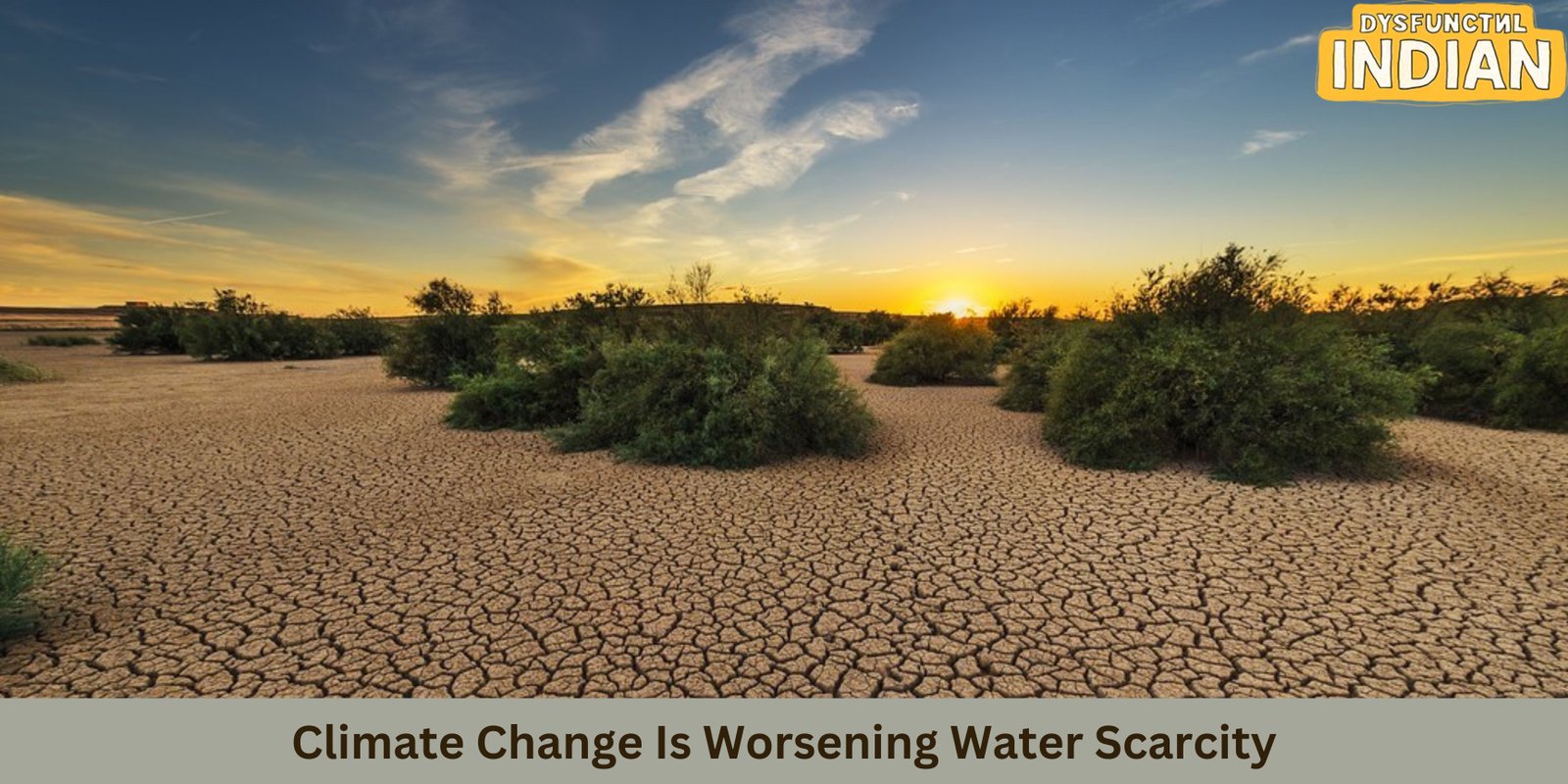
In the last few decades, water
scarcity has become one of the most pressing challenges for our planet. The
situation is especially concerning in India, where the population is growing
rapidly, and climate change is making water increasingly difficult to come by.
With India already experiencing severe droughts, erratic rainfall patterns, and
groundwater depletion, the water crisis is becoming more visible with each
passing year. But how exactly is climate change worsening water scarcity, and
what can we do about it?
The Impact of Climate Change on
Water Resources
Climate change is not just about
rising temperatures. It’s reshaping entire weather systems, which is having a
devastating effect on water availability. India has always had its monsoon
seasons, but these patterns are becoming more unpredictable due to climate
change. Intense floods in some areas and prolonged droughts in others are now
common occurrences. This inconsistency disrupts the water supply, leaving
regions that rely on consistent rainfall in danger of running dry.
Additionally, rising temperatures
are accelerating the melting of Himalayan glaciers, which serve as the main
source of water for the northern river systems like the Ganga, Yamuna, and Brahmaputra.
As these glaciers recede, river flows become unstable, making both floods and
water shortages more frequent. What was once a reliable water source is now
fluctuating, leaving millions of people vulnerable.
Groundwater Depletion: A Hidden
Crisis
India’s reliance on groundwater for
agriculture, industry, and daily use has grown alarmingly over the years. With
surface water supplies dwindling, people are digging deeper into the earth to
meet their needs. But this solution is short-lived.
The excessive withdrawal of
groundwater is rapidly depleting aquifers, especially in states like Punjab,
Haryana, and Uttar Pradesh. According to the World Bank, India is the largest
extractor of groundwater globally, accounting for about 25% of the world's
total extraction. However, as water levels sink lower, the cost and energy
required to pump it up increases, making it an unsustainable long-term
solution.
And climate change is making it
worse. With erratic monsoons, there’s less natural recharge of groundwater, leading
to even faster depletion. The strain on aquifers is not just a rural problem.
Cities like Bengaluru and Chennai are also grappling with groundwater
exhaustion, forcing them to truck in water from distant sources or rely on
expensive desalination plants.
Water Scarcity and Agriculture: A
Vicious Cycle
Agriculture is the backbone of
India's economy, employing nearly 50% of the population. But it’s also the
largest consumer of water, using up about 80% of the country's freshwater
resources. Climate change is making this relationship more strained.
Erratic monsoons and changing
weather patterns have made traditional farming practices less viable. Farmers
now rely more heavily on irrigation, which puts additional pressure on already
stressed water sources. As a result, a vicious cycle emerges: less water leads
to poor crop yields, pushing farmers to extract more water, which further
depletes water supplies.
The consequences of this are already
visible. In 2019, farmers in Tamil Nadu protested for water access after the
state experienced one of its worst droughts. Similar situations are happening
across India, especially in Maharashtra and Karnataka, where prolonged droughts
have left farming communities in deep distress.
The Urban Water Crisis: Cities on
the Brink
India’s cities are also feeling the
heat of the water crisis. With urban populations growing rapidly, the demand
for water in cities is skyrocketing. However, most cities lack the
infrastructure to meet this demand, leading to severe water shortages. In 2019,
Chennai made global headlines when it virtually ran out of water. Its
reservoirs were bone dry, and millions of residents were dependent on water
trucks for their daily needs.
Urban water bodies like lakes and
rivers, which once served as lifelines, are now polluted or encroached upon due
to rapid urbanization. The combination of climate change and poor urban
planning is putting an enormous strain on water resources, and without
significant intervention, more cities could face "Day Zero" scenarios
like Chennai.
What Can Be Done?
India’s water crisis is not just a
problem for the future—it’s here, and it’s getting worse. Climate change is
exacerbating the country’s already strained water resources, and without
serious intervention, both rural and urban communities will continue to suffer.
It’s time to act, before the taps run dry for good.
· Rainwater Harvesting: One of the most effective ways to
combat water scarcity is rainwater harvesting. By capturing rainwater and
storing it, both rural and urban areas can reduce their dependence on
groundwater and mitigate the impacts of erratic rainfall.
· Water Conservation Practices: The agriculture sector needs to
adopt more water-efficient farming practices, such as drip irrigation, which
uses water more sparingly. Farmers can also switch to less water-intensive
crops to reduce the strain on water supplies.
· Restoring Lakes and Water Bodies: Urban areas need to prioritize the
restoration of lakes, ponds, and rivers that have been neglected or polluted.
These water bodies not only provide a source of water but also help in
replenishing groundwater.