

Can Technology Fight the Lies It Helped Create
Posted by admin on 2024-10-21 | Last Updated by admin on 2026-10-01 14:56:57
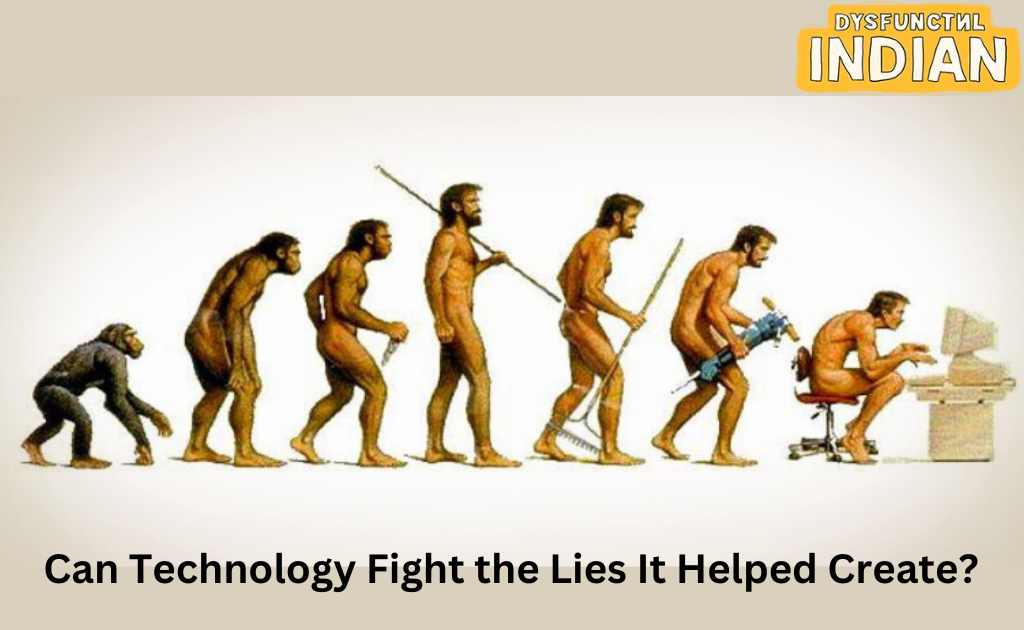
In today's fast-paced digital world,
the line between what's real and what's fake is becoming increasingly blurred.
Deepfakes, a technology that uses artificial intelligence to create highly
realistic manipulated videos, audio, and images, are now being weaponized in a
disinformation war that threatens to undermine trust in all forms of media. For
countries like India, where social media is a powerful tool for shaping public
opinion, deepfakes present a unique and dangerous challenge.
What Are Deepfakes?
Deepfakes are synthetic media
created using advanced AI algorithms. These algorithms can take real audio and
visual inputs and manipulate them to make it look like someone said or did
something they never actually did. Initially, deepfakes were used for harmless
purposes, like entertainment. But as the technology improved, it quickly became
a tool for malicious activities, such as discrediting public figures,
manipulating elections, and spreading misinformation.
During the Lok Sabha elections 2024,
an incident involving Bollywood actor Ranveer Singh showcased the potential
damage deepfakes can cause. A deepfake video of the actor endorsing a political
party went viral on social media. The video was so convincing that many people
believed it to be real. Singh had to flag the deepfake on his Instagram account
to alert his followers about the manipulation . Incidents like this show how
deepfakes can not only confuse the public but also harm the reputation of
individuals and create distrust in society.
The Disinformation Threat in India
India, with its vast population and
reliance on social media platforms like WhatsApp, Facebook, and Twitter, is
particularly vulnerable to the threat posed by deepfakes. In a country where
misinformation spreads at lightning speed, deepfakes amplify the dangers of
disinformation.
During elections, this threat
becomes even more pronounced. Deepfakes can be used to create videos of
political leaders making inflammatory remarks or supporting controversial
policies, which could sway voter opinions and alter the course of elections. In
an already polarized environment, this type of content can escalate tensions and
even incite violence. In a study by MIT, it was found that fake news spreads
six times faster on Twitter than the truth, which makes deepfakes an even more
powerful tool for spreading disinformation.
The Consequences of Deepfakes
The consequences of deepfakes can be
disastrous. Imagine a deepfake video being released just days before a major
election, showing a politician saying something inflammatory or divisive. Even
if the video is debunked later, the damage to public opinion would already be
done.
Moreover, deepfakes don't just
affect politics. They can destroy reputations, as seen in the Ranveer Singh
incident, and even lead to personal and financial harm. The rise of fake
pornographic videos, where the faces of innocent people are superimposed onto
explicit content, has already caused immense damage to individuals around the
world. In India, the societal and cultural implications of such misuse are even
more profound.
Can Technology Protect Us?
While deepfakes represent a serious
threat, technology also offers potential solutions. AI tools are being
developed to detect and expose deepfakes by analyzing inconsistencies in facial
movements, lighting, and audio. Companies like Facebook, Twitter, and YouTube
are investing in these technologies to identify and remove fake content before
it spreads too widely.
In fact, Facebook has launched a
Deepfake Detection Challenge to develop better ways of identifying these
manipulations. Similarly, Google's Jigsaw project is working on technology to
automatically detect deepfakes. These efforts are crucial because, as deepfakes
become more sophisticated, it will be increasingly difficult for the average
person to distinguish real from fake.
In India, organizations like Alt
News and Boom FactCheck are also playing a vital role in debunking fake news,
including deepfakes. Their work is essential in curbing the spread of
misinformation, but they face an uphill battle. The speed and scale at which
deepfakes and other forms of disinformation can spread make it difficult to
contain the damage.
The Battle for Truth
In response to the growing threat of
deepfakes, governments around the world, including India, are beginning to
explore legal and regulatory solutions. The Indian government has proposed
rules that would require social media platforms to identify and remove harmful
content, including deepfakes, within 24 hours. However, these regulations come
with their own set of challenges, particularly when it comes to balancing free
speech with the need for protection from harmful misinformation.
Other countries, like the United
States, are also considering laws to criminalize the malicious use of
deepfakes, especially in the context of elections and national security. But as
the technology continues to evolve, legal frameworks will need to adapt quickly
to keep pace with the growing threat.